


Air Quality Index Decoded: How the Air You Breathe Shapes Your Every Day, India’s AQI Secrets & Where We Stand Globally
Have you ever taken a deep breath on a misty winter morning, only to wonder—is this fog... or is it something far more sinister? Across Indian cities, what fills our lungs is often not just fragrant memories or cool evening breezes but a cocktail of unseen particles silently shaping our health, mood, and future.
In this immersive guide, vous will uncover what the Air Quality Index (AQI) truly means for you—from its mysterious numbers to the colors that pop up on your weather app. You'll learn why AQI isn't just a statistic, but a silent narrator of your daily story—affecting everything from your mood to your lifespan. We’ll unravel India’s unique AQI system, see how we stack up globally, and help vous take small yet powerful steps towards breathing easy.
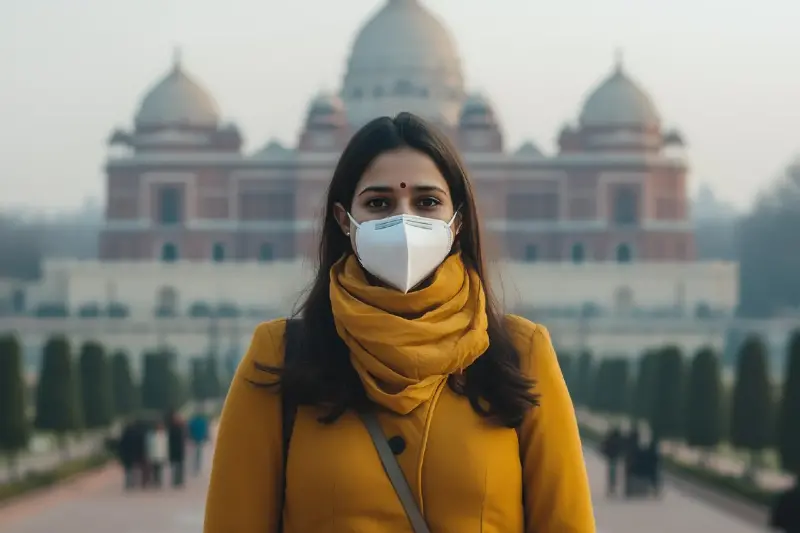
The Invisible Enemy: Why Air Quality Shouldn’t Be Ignored
Imagine this: vous step outside for a jog, unaware that microscopic particles swirl invisibly, entering your lungs, winding through your blood, and influencing your heart, your mind, even the glow of your skin.
Did you know? A bad air day in Delhi can be equivalent to smoking dozens of cigarettes, even if you’ve never touched one.
Poor air quality doesn't just irritate or inconvenience—it quietly alters concentration, sleep, immune strength, and long-term health. Understanding AQI gives vous the power to protect yourself and your loved ones.
What Exactly Is the Air Quality Index? Think Of It As Your Daily Wellness Meter
The Air Quality Index or AQI is like a daily report card for the air around you—a simple number and color that tell vous how safe, risky, or dangerous it is to breathe outside.
It condenses complex scientific data into a score—typically 0 (good) to 500 (hazardous). The higher the AQI, the greater the health risks, especially for children, elders, and those with respiratory issues.
The science—simplified:
- AQI tracks six reasons your air could harm you:
- Particulate matter (think PM2.5 and PM10—dust, smoke, soot)
- Sulphur dioxide (SO₂)
- Nitrogen dioxide (NO₂)
- Carbon monoxide (CO)
- Ozone (O₃)
- Ammonia (NH₃)
- Sensors and satellites collect air samples. Scientists translate raw data into a user-friendly number and color.
Think of it as a weather forecast, but for your internal well-being.
The Colors of Air: Cracking India’s AQI Chart
So what do those colors really mean on your AQI app or the weather board in your child’s school?
India’s AQI scale, launched by the Central Pollution Control Board, features six colors—from lush green to dark maroon. Each hue tells a story:

| AQI Value | Color | Health Message | |------------|--------------|---------------------------| | 0–50 | Green | Good—Breathe easy | | 51–100 | Yellow | Satisfactory—Okay for most | | 101–200 | Orange | Moderate—Sensitive people, watch out | | 201–300 | Red | Poor—Limit outdoor activities | | 301–400 | Purple | Very Poor—Take precautions | | 401–500 | Maroon | Severe—Health emergency, stay indoors |
Quick takeaway:
- If it’s green or yellow, stretch, walk, enjoy the open air.
- Orange and above? Think about masks, air purifiers, or shifting activities indoors.
- Purple–Maroon? The government may even close schools or restrict outdoor work.
Measuring AQI: The Science Behind the Numbers
Vous might wonder—how do they really measure the air? No magic—just vigilance!
India has a growing network of hundreds of monitoring stations. They draw in air, trap pollutants, and analyze their levels every few minutes. Think of it like a security scan at the airport, except this is for your health.
- Why it matters:
- Regular updates keep you informed.
- Local variations mean AQI can shift from one neighborhood to another.
- Modern apps now regularly send real-time alerts.
India vs. The World: How Do We Fare?
Here comes the reality check. Seven of the world’s top ten most polluted cities were in India in 2023. Whether it's Delhi’s smog or Kanpur’s haze, Indian metros are among the world’s most challenging places to breathe.
Compared globally:
- Developed nations (like Japan, Australia, Canada): Consistently ‘Green’ or ‘Yellow’ most days.
- India: Swings between ‘Orange’ to ‘Maroon,’ especially in winter and post-festival seasons.
- Recent highlights:
- Policies on stubble burning, vehicle emissions, crackers ban, and green transitions are underway—hope flickers, but transformation is slow.
What This Means For You—And What You Can Do
You can’t control the city’s smog overnight, but small acts ripple outwards:
- Check AQI before stepping out (weather app, government AQI website)
- Invest in an indoor purifier—especially for sensitive family members
- Grow air-purifying plants like areca palm or snake plant
- Support carpooling, public transport, or cycle when possible
- Advocate for cleaner celebrations and mindful festivals
Every action vous take—however small—helps your lungs and your city’s future.
Breathe, Notice, Act: The Story You Write With Every Inhale
Pause for a moment. Close your eyes and breathe in—can you feel the story your city’s air tells you today? AQI is far more than just a number; it’s an invitation to awareness, a call to responsibility, and, perhaps, a reason for hope.
As you step out tomorrow—jogging, laughing, or just sipping chai at sunset—take a moment to listen to the air. What would it whisper to you, if it could speak?
Continue the conversation. The air around vous might just reveal more than you expect.