



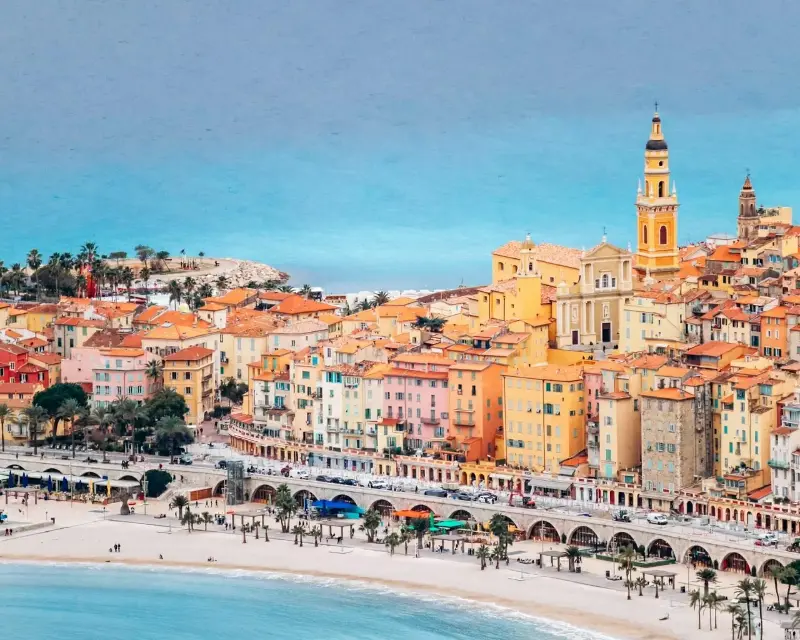
History shapes identity.
Located at the crossroads of two countries, Menton has a unique history. Over the centuries, the land has continuously changed hands , belonging to the Grimaldi family of Monaco, then the Kingdom of Sardinia, before officially becoming French territory after the 1860 referendum. According to The Guardian , this process of shifting ownership has created a Menton that "does not entirely belong to one side," with a distinctly blended cultural identity.
Even in the 20th century, Menton became the only French town to be completely annexed by Italy during World War II. These lasting upheavals left a profound mark on the local culture and way of life, which The Guardian noted was “present in every layer of urban space and community memory.”
Menton's urban landscape clearly reflects this history of cultural exchange. While in many other French cities, street names are primarily associated with national figures such as Pasteur, Victor Hugo, or Général de Gaulle, here, the system of place names runs parallel to both influences. Alongside familiar French names are avenues and streets with Italian influences such as Cernuschi, Laurenti, Pietra Scritta, Isola, and Mattoni.
International influence is also evident through the layers of memory associated with the figures who once resided here. Victoria Square recalls the visit of the Queen of England in 1882. Blasco Ibáñez Avenue is named after the Spanish writer who lived in Menton during the 1920s. These names are not merely administrative symbols, but also reflect a period when Menton was a destination for European nobility, artists, and intellectuals.
On the hillsides overlooking the sea, the depth of history continues to be preserved through the cemeteries. At Vieux Château, Reverend William Webb Ellis, associated with the birth of rugby, has been laid to rest since the 1860s. His grave is always covered with rugby balls and club ties, becoming an iconic resting place.
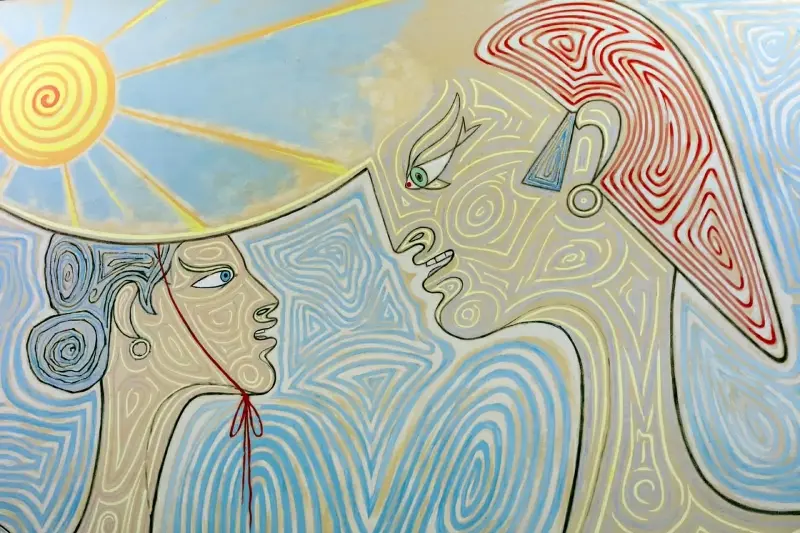
Entering the 20th century, the artistic imprint continued to be built when the French artist Jean Cocteau was invited to decorate the city's marriage registration office in 1955. Images of Greek mythology such as Orpheus and Eurydice were combined with details of local life, creating a unique artistic space that remains open to visitors today.
Distinctive tourism brand
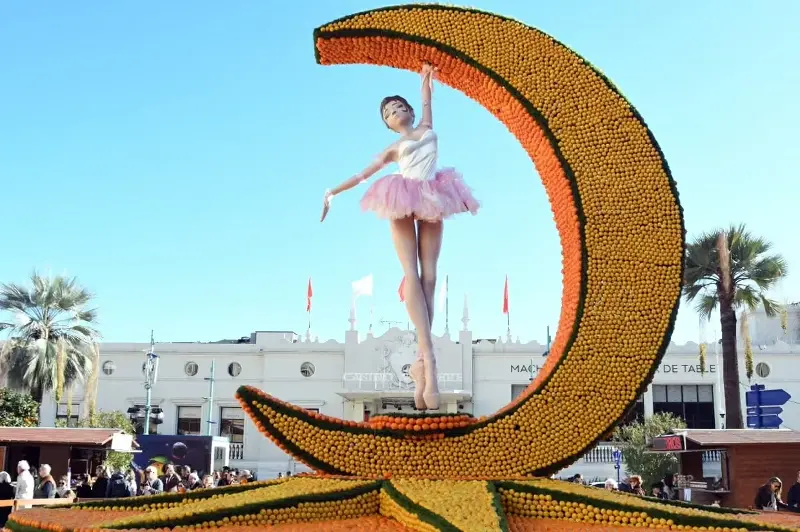
If one had to choose a symbol to represent Menton, it would be the lemon. More than just an agricultural product, the lemon has become a key element in how the locality builds its image and develops tourism.
Thanks to its warm winters, terraced terrain, and characteristic sandy soil, Menton boasts a microclimate favorable for citrus trees. According to chef Mauro Colagreco, Menton lemons have thick skins, a sweet taste, are edible with the peel on, and are very juicy, with a slightly curved tip resembling a "smile."
From late February to March, Menton enters its "golden season," when lemons, daffodils, and mimosas bloom in abundance. This is also the time of the Lemon Festival (Fête du Citron), an annual event held since 1934.
The festival lasts over two weeks, attracting around 200,000-250,000 visitors each year, making it one of the major winter events in the Riviera region. During this time, parades, giant floats, and fruit sculptures are held continuously, creating the characteristic festive atmosphere of Menton. At its 92nd edition, hundreds of tons of oranges and lemons were used to create the large-scale sculptures.
Menton doesn't just use lemons for decoration; they incorporate the fruit into various tourism activities, from festivals and cuisine to local products. As a result, visitors not only "watch" the festivals but also participate in the cultural space associated with this fruit.
Alongside tourism development, the locality maintains its indigenous agricultural values by establishing a geographical indication for Menton lemons and encouraging small-scale, high-quality production. Despite its modest yield, Menton lemons remain a symbol associated with the local image.
Creating lasting appeal
Unlike many other destinations in the Riviera that rely heavily on the summer season, Menton hosts its Lemon Festival in late winter, helping the town attract a large influx of visitors during the off-season, thereby extending the tourist season and distributing visitors more evenly throughout the year.
Besides the event aspect, Menton also effectively leverages its geographical advantage of being located near the Italian border. Experiences such as cycling to Sanremo or visiting Dolceacqua for a day trip have become distinctive tourism products, creating a seamless connection between the two countries.
This also shows that Menton is not directly competing with glamorous destinations like Nice or Cannes, but is choosing to build its own image based on cultural exchange and a slow pace of life.
As a result, Menton attracts travelers seeking unique experiences, focusing on cultural depth and local life. With over 300 sunny days a year and a distinctive coastal setting, the town maintains its appeal year-round, rather than being concentrated in a single peak season.
Beyond developing tourism, Menton has also preserved its cultural depth as a core part of its identity. The cemeteries on the hills, the art spaces, and the sites that hold urban memories continue to contribute to Menton's richness, where the past and present coexist in daily life.
In The Guardian 's portrayal of the Riviera, Menton may not be the most striking destination, but it is the one that leaves a lasting impression.