


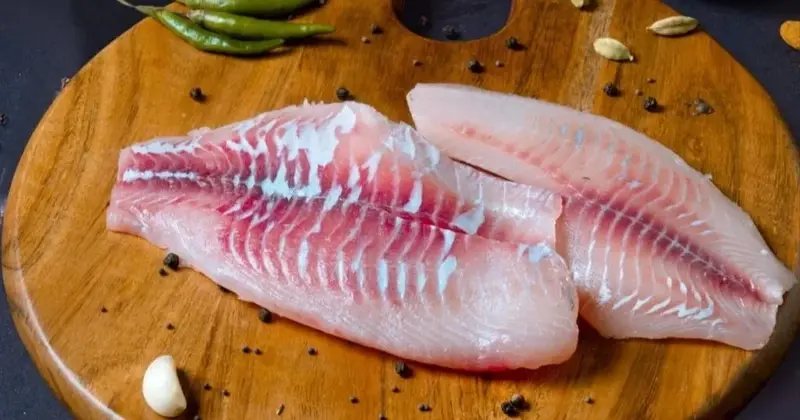
Vietnamese tilapia conquers the Japanese market.
According to information from Vietnam Clean Seafood Joint Stock Company ( Can Tho City), the company has just completed the export of its first batch of tilapia fillets (boneless fish meat) to Japan in July for use in sushi and sashimi dishes.
This is the result of approximately six months of investment by the company in developing a process for raising and processing tilapia fillets according to standards for the value-added food segment.
According to Mr. Vo Van Phuc, General Director of Vietnam Clean Seafood Joint Stock Company, the company's tilapia fillet products have received positive feedback from customers in the Japanese market regarding their quality and taste.

Tilapia is gradually becoming a major farmed product in many localities in the Mekong Delta region (Photo: Nam Binh).
In the near future, in addition to the Japanese market, this company will continue to expand the export of value-added tilapia products to the United States, Canada, and many other markets.
"The quality of tilapia after filleting and processing into value-added products has been praised by many international customers. Therefore, we will expand our farming area to meet market demand, while ensuring traceability of raw materials," Mr. Phuc said.
According to assessments, the market for tilapia fillets still has significant potential. This is because climate change is making it difficult for many countries to raise fish in the sea due to increased mortality rates and higher production costs. Meanwhile, the natural conditions in Vietnam's coastal brackish waters are quite suitable for large-scale tilapia farming.
However, to meet the demands of high-end markets like Japan, the farming process must be systematically invested in, with strict control over quality, food safety, and traceability.

Vietnamese tilapia fillets are exported to Japan for use in sushi (Photo: VNC).
The export event to Japan took place against the backdrop of tilapia emerging as one of the fastest-growing sectors in Vietnam's aquaculture industry.
In just the first five months of 2026, tilapia exports reached $62 million, an increase of over 100% compared to the same period last year.
Brazil continues to be the largest import market for Vietnamese tilapia. In May alone, exports to this market reached approximately $8 million, bringing the total for the first five months to $34 million, accounting for more than half of the country's total tilapia export value.
The advantage comes from a controlled production chain.
The expansion into Japan is expected to help the tilapia industry reduce its dependence on certain traditional markets, while gradually increasing the proportion of high value-added products.
According to experts, one of the factors that helps Vietnamese tilapia access demanding markets is its increasingly sophisticated production management system.
The entire production chain, from breeding stock, farming areas, procurement, processing to export, is managed according to the regulations of the Fisheries Law, the Law amending and supplementing certain articles of the Fisheries Law, and relevant decrees and circulars guiding veterinary medicine, food safety, and traceability.

Currently, Vietnam has the capacity to produce approximately 1.4 billion tilapia fingerlings per year (Photo: Nam Binh).
Accordingly, aquaculture facilities must register their farming areas, keep production logs, manage the use of feed, veterinary drugs, and chemicals, and comply with regulations on disease prevention and control and environmental monitoring.
Furthermore, traceability is implemented throughout the entire process, from farming to processing. Exporting businesses must maintain complete records of raw materials and production processes, and meet the quality control requirements of regulatory agencies as well as importing markets.
This is considered a crucial foundation for Vietnamese tilapia to meet the increasingly stringent food safety and transparency standards of markets such as Japan, the United States, and the European Union.
According to many businesses, the global demand for tilapia still has significant growth potential as consumers seek affordable protein sources amidst economic uncertainties. Several companies are expanding their farming areas and building processing plants, investing heavily in tilapia production.
Mr. Do Ngoc Tai, General Director of Tai Kim Anh Co., Ltd., shared that the company has started construction of a tilapia processing plant in An Nghiep Industrial Park (Soc Trang province).
After commencing operations in mid-2025, the plant achieved a processing capacity of approximately 200 tons per day, supplying products such as tilapia fillets, whole fish, and various value-added items.
According to fisheries data, the country's tilapia production is projected to reach approximately 420,000 tons in 2025, an increase of about 33% compared to the previous year. Along with this rapid increase in production, the production chain is also becoming increasingly sophisticated. Currently, Vietnam has the capacity to produce about 1.4 billion tilapia fingerlings annually and has approximately 510 seafood processing facilities that meet export requirements, creating a foundation for developing deeply processed products to serve the international market.