



Back in 1820, John Keats warned us that scientists had begun to “unweave the rainbow”. His narrative poem Lamia reaches its climax when an uninvited guest arrives at a wedding feast, a philosopher named “Apollonius” in reference to the Greek god of science and reason. This second Apollo has an eye like a telescope and a mind that “conquers all mysteries by rule and line”: he is widely understood to be a reference to the physicist Isaac Newton.
Keats’s uninvited guest isn’t a malevolent fairy, but the reverse: a self-righteous scientist for whom magic is the enemy. With the force of his glare, Apollonius sees through the supernatural arts that have been used to transform the monstrous bride into a beauty. The bridegroom, Lycias, dies instantly from shock.
The poet, however, makes clear that we shouldn’t blame feminine deceit. The villain of the piece is the scientist who ripped away the groom’s happiness out of ultra-rationalist refusal to let humanity take simple joy in beauty. “Do not all charms fly, at the mere touch of cold philosophy?”, he writes. We all value truth, but none would welcome the wedding guest who turned up and started waving the receipts for the bride’s latest round of Botox.
I thought of Keats, as I suspect many readers will, when I read this week about the latest attempt by scientists to “unweave” the beauty of the heavens.
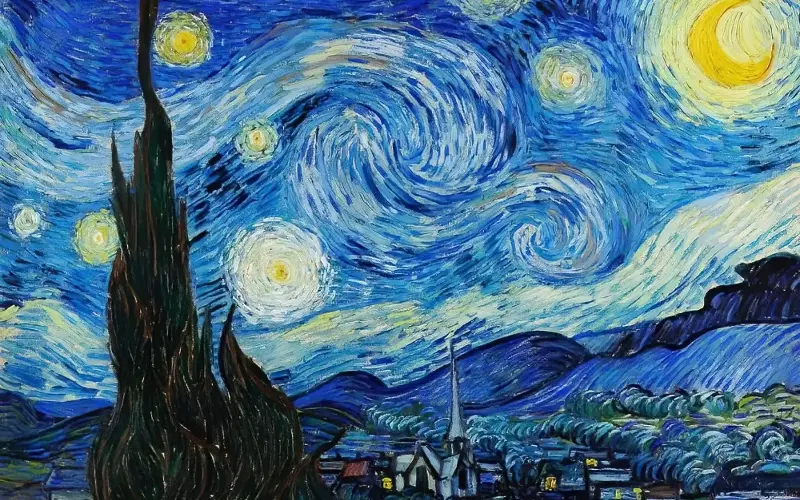
This time, their target isn’t even the natural skies – for which even the last Romantics among us might accept that astronomical analysis comes in useful – but Vincent Van Gogh’s 1889 post-impressionistic vision of the Provençal night sky, The Starry Night.
By carving up Van Gogh’s canvas into a set of gridlines and compass points, a South Korean team now claims to have identified the constellation of stars likely to have inspired the painting. It’s Venus and the Hyades cluster, in case you’re interested, which you shouldn’t be. Supposedly, we can trace these stars behind the spirals of Van Gogh’s masterpiece, which in turn tells us that Van Gogh may have looked out of his window on July 22, 1889, when the Hyades would have been visible over Van Gogh’s mental asylum in Saint-Rémy de Provence. On the other hand, he may not.
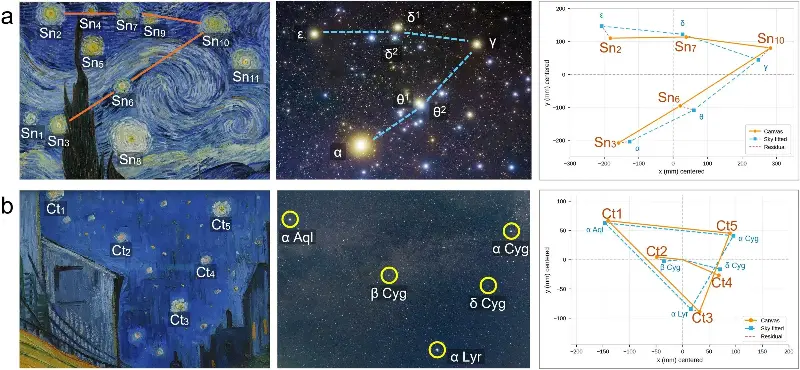
Is any of this useful? Van Gogh painted The Starry Night shortly after the infamous occasion on which he removed his own ear, an episode which continues to draw ghoulish interest. So if biographers want to confirm that he did indeed end up in the Saint-Paul-de-Mausole mental asylum, and perhaps even a particular bedroom which would have given him the perfect view of the Hyades constellation, this might be useful. That’s if other sources hadn’t already told us all those things.
The conceit also relies on scientists’ confidence that this astral geometry can be clearly detected in Gogh’s image. It only takes a passing acquaintance with a postcard to recall that the beams of light which swirl across Van Gogh’s skyscape bears only the most passing relationship to naturalistic astronomy. Art historians will still argue over whether Van Gogh can truly be called an “impressionist” or “post-impressionist”, but the key is in the central component: impression.
The tragedy of this is that The Starry Night is one of the most accessible of our great paintings to newcomers – but it won’t be if they’re told they need to read a science book first.
True, knowledge of Van Gogh’s biography is often an entry point for morbid young people seeking instinctive emotional connection: like many mopey adolescents, I encountered The Starry Night at the same time I discovered Don McClean’s song, Vincent, with its themes of suicide, isolation and social resentment.
A crass AI clip now doing the rounds will claim to show you a Gogh’s face when he discovers, in 2026, that people are still viewing his work. (“You needn’t have topped yourself, Van Gogh! Everyone loves you!”, it implies.) But we do art lovers a disservice when we tell them that they need to read an astronomical paper to understand a painting. Forget unweaving the rainbow: let us refrain from putting gridlines over Van Gogh’s skies.