



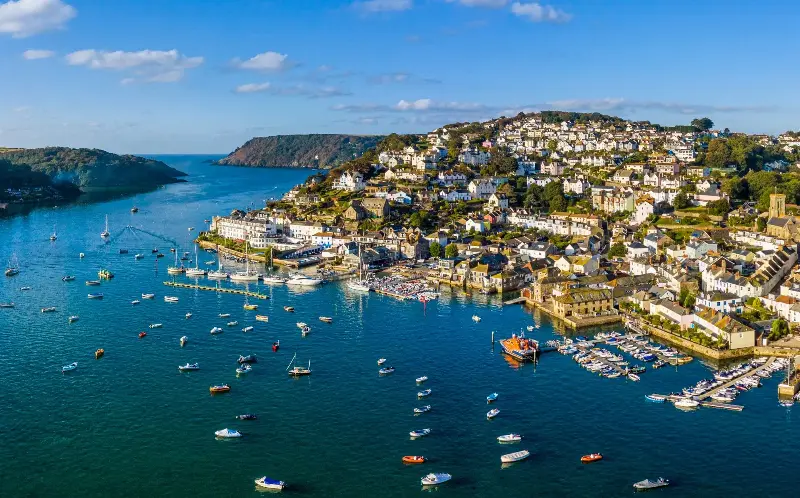
Holidays in Devon are simple, wholesome and old-fashioned. A trip here mixes two of life’s loveliest pleasures: delicious food and the great outdoors. Most visitors are drawn to the magnificent beaches on the north and south coasts, but inland has its appeal, too: Dartmoor and Exmoor are vast rocky plateaux offering solitude and big skies, while the gentler, Friesian-filled fields of mid-Devon hide clusters of thatched villages, meandering rivers and thickly wooded cleaves.
Devon folk make the most of the rich larder on their doorstep, with pasture-fed lamb, wild venison, pheasant and locally landed seafood all staples in restaurants. At weekends, market towns bustle with food, antique and craft stalls, while village fairs offer an eccentric taste of country living. Like anywhere it pays to research before you go. Get it right and a holiday in Devon will beat any foreign destination hands-down.
In this guide
The perfect weekend in Devon
Just half-an-hour west of Exeter, where there are fast mainline railway links to London, Dartmoor makes a dramatic and surprisingly accessible weekend destination. Foodie Chagford or the thatched village of North Bovey make good bases from where you can easily explore the moor’s Bronze Age hut circles, ancient glades, hamlets and vast expanses roamed by wild horses. Accommodation options in North Bovey include Bovey Castle, the Ring of Bells pub and a variety of independent holiday cottages, while in Chagford there’s the cosy Three Crowns and Gidleigh Park (one of the Telegraph’s 250 best hotels in the UK for 2026).
A road trip is the easiest way to get a feel for Devon’s wilderness. Head first to Grimspound, one of the most complete examples of the moor’s prehistoric villages, then drive to Two Bridges for a short walk to Wistman’s Wood, an ancient, protected dwarf-oak woodland with giant mossy boulders and lichen-encrusted trees. Dartmoor Prison Museum hosts a fascinating history of this Victorian prison, along with a gruesome collection of items confiscated from prisoners, including makeshift weapons and escape gear such as time-worn knotted sheets. Dartmeet is a local beauty spot, Buckland-in-the-Moor is an exceptionally pretty hamlet, while the Rugglestone Inn in Widecombe-in-the-Moor, is the place for a pub lunch and pint of Dartmoor real ale.
With a car park at its base, Hound Tor is one of the least arduous locations for a walk – clamber to the top of these towering granite boulders to gawp at panoramic Dartmoor views. The hike from here to Haytor is a personal favourite, with craggy moorland vistas and a wooded glade that makes the most idyllic riverside picnic spot.
For evening entertainment, you might catch an impromptu folk night at a local pub. On balmy Friday evenings, join locals on the sunny granite wall opposite Chagford’s Globe Inn, where chit-chat is punctuated by occasional bursts of live opera by a local professional singer.
The perfect week in Devon
For a longer stay in Devon, split your time between moor and sea. Few places will give a better contrast to the square-jawed beauty of Dartmoor than the soft sands and glittering bays of Salcombe, on the south coast. South Sands Hotel, the Harbour Beach Club, Salcombe Harbour Hotel and Gara Rock are all excellent accommodation options.
With safe, shallow swimming in a perfect crescent cove, South Sands is my go-to beach and is close to all the hotels listed above. From there, it’s a half-hour walk, shuttle ride or short boat ride to Salcombe, a buzzy yachtie town with narrow streets lined with pastel-hued boutiques and cafés. Watch your own ice-cream being made at Salcombe Dairy, learn how to make gin at Salcombe Gin, stock up on Devon fudge at Roly’s Fudge Pantry, enjoy a waterside grill at Dick and Wills, or a classic Devon pub lunch at the Ferry Inn.
Devon’s most spectacular stretch of the South West Coastal Path starts at Salcombe, running up towards Bolt Head. Buy a picnic from beachside café The Winking Prawn on North Sands, and strike out for the eight-mile walk to Hope Cove, tracing jagged peaks, secluded sandy coves and bucolic Devonshire pastures dotted with doe-eyed cows and gambolling lambs, during the spring.
En route is National Trust property Overbeck’s, where beautiful waterside views are framed through the property’s sub-tropical gardens. Make time for a sundowner on South Sands Hotel’s beachside terrace.
You’re spoilt for choice for dining in these parts. For excellent pub fare, try the Victoria Inn and for the best local fish – and views – head to Salcombe Harbour Hotel’s Jetty restaurant.
A short drive away, the The Pilchard Inn in Bigbury is a weather-beaten smugglers’ pub serving Devon real ales and good pub grub alongside a hearty portion of piratical history. Cut off by tides twice a day, getting there is all part of the fun – a two-storey high sea tractor ferries guests across the parting tides. The Millbrook Inn is a cosy pub set on a tranquil creek in South Pool serving gourmet pub cuisine using organic and high-welfare produce when possible.
When to go
Most of Devon’s main attractions, museums and National Trust properties open from the beginning of April to the end of October. If you can visit outside the school holidays, do: you’ll avoid M5 tailbacks and crowded beaches. If you can’t, avoid driving down on a Saturday, the changeover day for most holiday cottages.
After the Easter holidays, coastal paths are awash with spring flowers. In autumn, the turning of the colours on the moors is glorious, and in September and October, the sea is at its warmest and the beaches at their quietest. Visiting in winter has its benefits – among them, holing up by a fire in a cosy pub – but it has drawbacks too: most attractions are closed, bus services are limited and strong winds can make coastal walks unpleasant.
Where to stay
Best for foodies
Gidleigh Park near Chagford (from £247) offers Michelin-starred dining in a woodland sitting, while on the other side of the moor, Hotel Endsleigh (from £300), set in Grade 1-listed gardens, also offers sublime dining with sweeping views of the River Tamar.
Best for lovebirds
In Salcombe, South Sands Hotel (from £189) has doubles with in-room roll-top baths giving way to waterside views. On Dartmoor, Bovey Castle’s luxurious rooms have sweeping views of the moor through mullion windows.
Best for spa lovers
Borringdon Hall (from £180) has a multi-million pound, state-of-the art spa, while in Babbacombe, The Cary Arms (from £165) has a small yet stylish glass-fronted spa with sea views.
Know before you go
Plan ahead
- Obtain a tide table from a newsagent and time your beach visit accordingly: at high tide, beaches are crowded, thin strips of sand. Swimmers should beware of rip tides and strong currents, and only swim between the flags on beaches that have a lifeguard.
- Ticks that carry Lyme disease can be a problem on the moors and in grassy and woodland areas of Devon. Wear insect repellant and tuck socks into long trousers to avoid being bitten and check your skin for little black blobs daily. For more, see our guide to protecting yourself from ticks on holiday.
- Avoid driving in Salcombe at peak hotel check-in and -out times (around 10.30am and 3pm), as the single-track lanes get gridlocked.
- Devon’s weather is famously changeable, so assume you’ll get rained on at least once.
- Many rural areas of Devon don’t have mobile-phone reception so be prepared for a hike to the nearest farm if you run into trouble when you’re out and about.
- Public transport in Dartmoor and Salcombe is limited, but good tours are offered by Unique Devon Tours and Proper Dartmoor Tours.
Local etiquette
- Devon is latticed with single-track lanes, so good reversing skills are essential to allow oncoming cars pass. If you’re not feeling confident, practise backing into tight spaces before you arrive to avoid the wrath of other motorists (and dinking your wing mirror).
- Devon has a strong drinking culture: most pubs are at their busiest at 5pm when locals finish work. In remote areas, drink driving is more prevalent than in towns, so don’t be lulled into having “one for the road”.