



The NASA administrator declared support for restoring Pluto's planetary status and stated that scientific studies are being prepared for presentation to the international astronomical community.
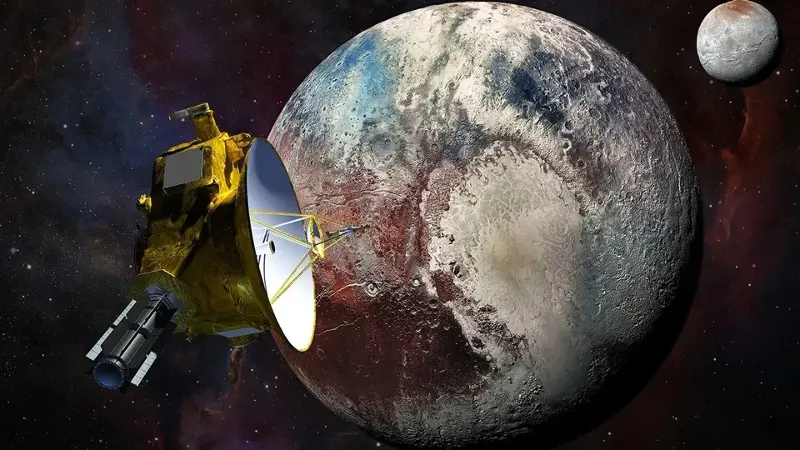
Pluto has been downgraded to a dwarf planet. Photo: Space.
The debate over how to define Pluto has been reignited after 20 years. During a hearing before the US Senate Budget Committee, NASA Administrator Jared Isaacman declared that Pluto should be reinstated as a planet in the Solar System. He also revealed that NASA is preparing scientific studies to lobby the international astronomical community to reconsider the 2006 decision.
"We are working on some papers that we want to bring to the scientific community to restart this discussion," Isaacman said at the hearing.
Pluto was discovered by astronomer Clyde W. Tombaugh in 1930 and was recognized as the ninth planet of the Solar System for 76 years. However, all that changed in 2006 when the International Astronomical Union (IAU) adopted a new definition of a planet with three criteria: orbiting the Sun, being spherical, and having its orbit separate from other celestial bodies.
Pluto passed the first two criteria but failed the third because it is located in the Kuiper Belt, where many similarly sized celestial bodies coexist. As a result, the IAU downgraded Pluto to a dwarf planet.
That decision sparked much debate that continues to this day. Pluto, with a diameter of approximately 2,253 km—about half the size of the United States—is located about 5.8 billion km from the Sun, and its temperature can drop to -232 degrees Celsius. Despite its small size, it possesses a complex topography including valleys, glaciers, mountains, plains, and craters, along with a thin atmosphere. Its most striking feature is the giant heart-shaped bright area north of the equator, which has given many people a special fondness for this celestial body.
Since 2006, numerous scientists have voiced their opposition to the IAU's decision. Their counterarguments point to Pluto's complex geology, atmosphere, and geophysical features as evidence that it deserves to be called a planet in the physical graveyard, even if it doesn't meet the IAU's orbital definition.
However, the final decision rests with the IAU. While Isaacman may lobby and NASA may publish scientific studies, the IAU is the only organization with the authority to change Pluto's official classification.