


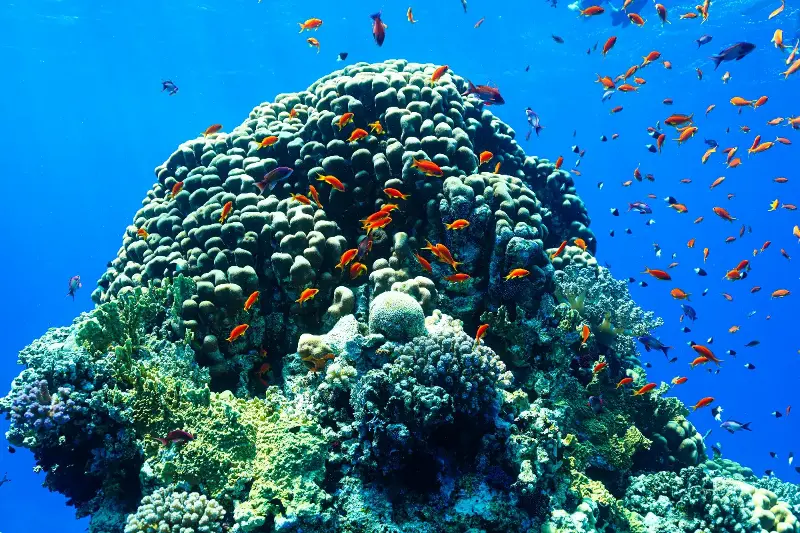
Beneath the surface of our planet’s vast oceans lies a world teeming with life forms that challenge our understanding of biology, behavior, and even imagination. While we have mapped terrestrial mountains and journeyed across deserts, the ocean remains largely uncharted, hiding creatures more bizarre than any fiction. From sun-drenched tropical reefs to the dark depths, marine life has evolved an array of astonishing adaptations to survive. Let’s take a deep dive into some of the most intriguing ocean mysteries, discovering the fascinating sea dwellers and truly unique behaviors that set them apart from anything found on land.
MASTERS OF DISGUISE: CAMOUFLAGE KINGS OF THE OCEAN
The underwater world is a theater of deception, where camouflage allows creatures not just to blend in, but to practically disappear. Cephalopods—octopuses, squids, and cuttlefish—are nature’s most talented illusionists.
- The common cuttlefish is a marvel of transformation; using specialized skin cells called chromatophores, it can alter both color and texture within seconds to mimic everything from a sandy seafloor to vibrant coral. Remarkably, cuttlefish are colorblind, relying on alternative visual cues and skin receptors to match surrounding hues.
- The mimic octopus is a brilliant strategist that can impersonate more than fifteen different marine animals—including flounders, lionfish, and sea snakes—depending on the specific threat it faces. By altering its body shape, coloration, and movement, its vanishing act easily fools both predators and unsuspecting prey.
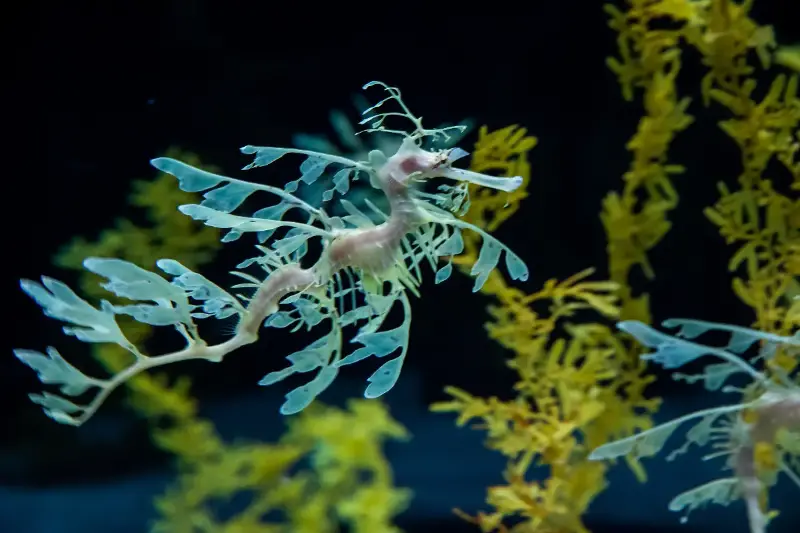
- The leafy sea dragon, a close relative of the seahorse, uses permanent, flawlessly designed leaf-like protrusions to blend seamlessly with seaweed and kelp, floating invisibly along ocean currents.
- The stonefish lies completely motionless on the seafloor, looking remarkably like an ordinary rock. This structural camouflage doubles as a highly effective trap, making it one of the most successful ambush predators on the planet.
BIOLUMINESCENT MARVELS: GLOWING IN THE ABYSS
Travel miles below the surface, past the point where sunlight can penetrate, and you enter the deep sea. In this realm of crushing pressure and total darkness, creatures have developed bioluminescence—the ability to produce their own light.
The anglerfish uses a glowing appendage dangling in front of its large jaws to attract prey in the pitch-black environment. This eerie glow is produced by a symbiotic relationship with bacteria living inside the lure.
Other deep-sea dwellers use light as a defensive asset. The vampire squid takes bioluminescence to an extraordinary level; when threatened, it releases tiny, glowing particles into the water, creating a dazzling light bomb that distracts and confuses predators, giving the squid a perfect window to escape. Meanwhile, vast shoals of tiny lanternfish create breathtaking underwater light shows, utilizing light organs to communicate, coordinate movements, and attract mates.
Yet perhaps nothing rivals the giant Apolemia siphonophore, found in the deep waters off the coast of Australia, for sheer strangeness. The siphonophore is not a single animal, but a colonial organism made of thousands of highly specialized individuals called zooids that function together as one. Forming spiraled, glowing chains up to 40 meters long, they are among the longest organisms on Earth.
INNOVATIVE HUNTERS AND EXTRAORDINARY ARCHITECTS
Life in the ocean rewards innovation, yielding ingenious survival strategies and complex engineering:
- The archerfish showcases remarkable mathematical instincts in coral reefs. To hunt insects resting on low-hanging branches, it shoots powerful jets of water from its mouth. The archerfish instantly judges the angle of refraction—how light bends as it passes from air to water—and compensates its aim perfectly to hit targets up to two meters away.
- The blanket octopus employs an even rarer hunting strategy: tool use. Immune to dangerous toxins, females have been observed tearing the stinging tentacles off Portuguese man o' war jellyfish, wielding them as defensive assets or whips to stun prey.
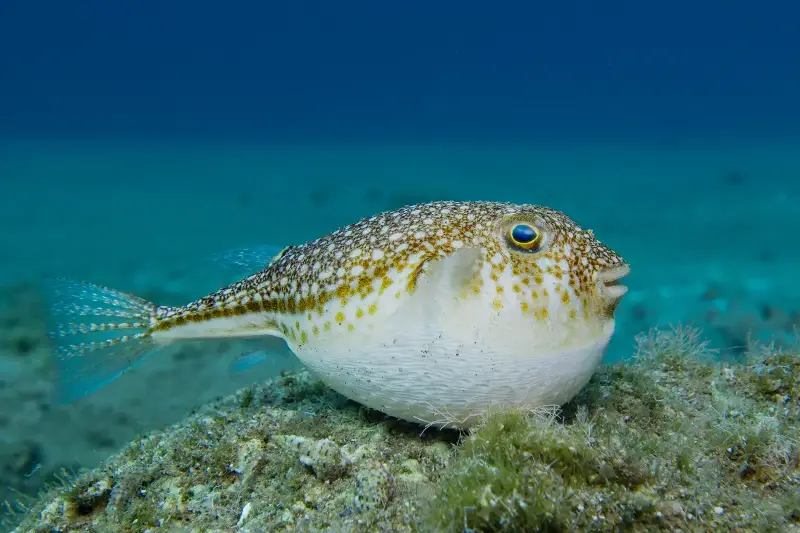
- The male pufferfish is one of the ocean's smallest engineers. It spends days tirelessly fanning its fins to sculpt geometric, circular patterns in the sand that exceed six feet in diameter. These intricate structures break currents to safeguard eggs and attract females, who select their mates based on artistic skill.
- Tiny coral polyps work collectively over thousands of years on a macro scale, secreting limestone to build massive reefs. Known as the rainforests of the sea, these living architectural structures support nearly a quarter of all marine species.
SOPHISTICATED LANGUAGES AND ADVANCED SENSES
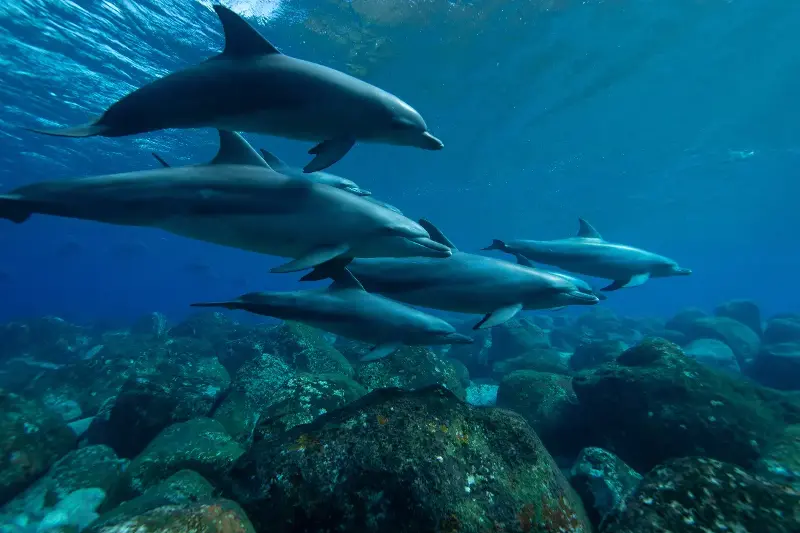
Sophisticated communication is not reserved for land mammals. Underwater, dolphins use an impressive range of whistles, clicks, and pulsed sounds to coordinate hunting and socialize. Scientists have observed that each dolphin develops a unique signature whistle, which acts much like a personal name or ID tag. Sperm whales employ complex patterns of clicks called codas to identify family groups, exhibiting distinct regional dialects that suggest a form of marine culture.
For the vibrant mantis shrimp, communication is tied to some of the most extraordinary eyes in the kingdom. Capable of seeing ultraviolet, infrared, and polarized light, they use intricate color signals and polarized body patterns for territorial disputes and mating rituals. When communication fails, the mantis shrimp deploys a legendary asset: a club-like punch delivered at the speed of a bullet, capable of shattering aquarium glass and instantly stunning prey.
UNCONVENTIONAL PARENTING AND EPIC MIGRATIONS
Marine reproductive strategies frequently defy terrestrial expectations. Male seahorses present a famous role-reversal approach to child-rearing; after the female deposits her eggs into his brood pouch, the male nurtures them for several weeks, making them the only known males in the animal kingdom to experience pregnancy. Clownfish are equally dedicated, with males constantly guarding and fanning their rock-bound eggs to keep them oxygenated and clean until they hatch.
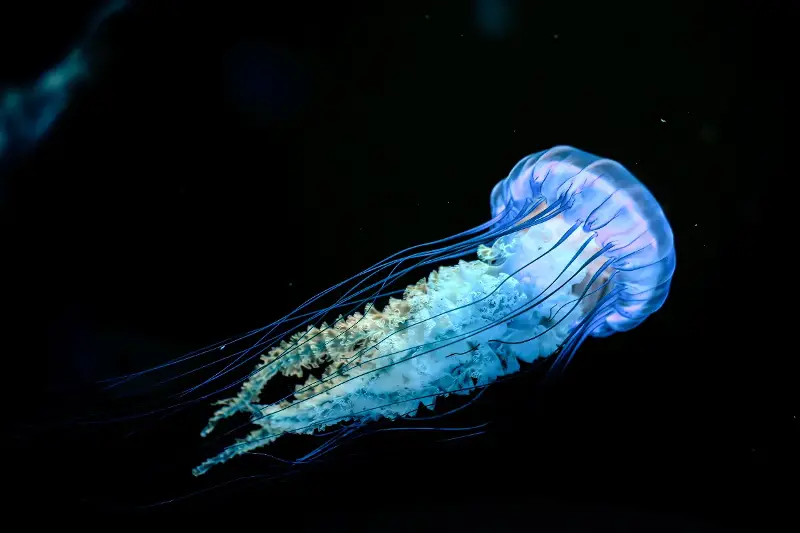
Perhaps the most radical biological trait belongs to the immortal jellyfish (Turritopsis dohrnii). When faced with physical trauma or environmental stress, it can revert its cells to an earlier colonial stage of life, resetting its biological clock and theoretically allowing it to live forever.
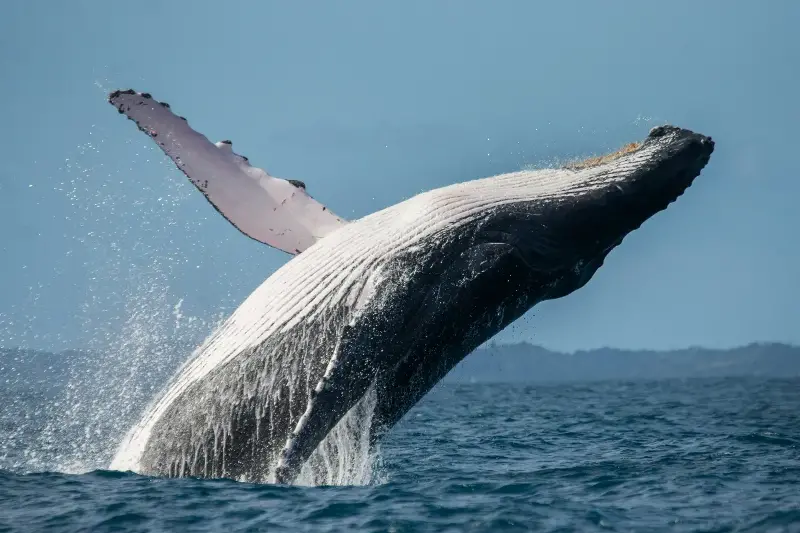
These life cycles culminate in some of the planet's most mystifying migrations. Humpback whales traverse thousands of kilometers from polar feeding grounds to tropical breeding sites, navigating featureless oceans using echolocation, magnetic fields, and the position of the stars. Leatherback turtles navigate across entire ocean basins, driven by ancient instincts to return to the exact beaches where they were born to lay their eggs.
Equally baffling is the journey of the European eel. Hatching as tiny larvae in the Sargasso Sea, they drift across the Atlantic to European freshwater rivers, where they live for up to twenty years. Against all odds, they eventually navigate the grueling journey back to the Sargasso Sea to spawn and complete their lifecycle.
A LIVING LABORATORY
The ocean’s mysteries continue to reveal mind-boggling wonders, opening windows into evolution’s wildest experiments. Whether it is an octopus impersonating another sea creature, a tiny fish sculpting geometric art, or a whale singing across vast oceanic valleys, the deep blue never ceases to inspire. Each secret unraveled reminds us that in the heart of our planet's oceans, life always finds a brilliantly resourceful way to thrive.